160th Scottish Highland Gathering & Games in Pleasanton, California
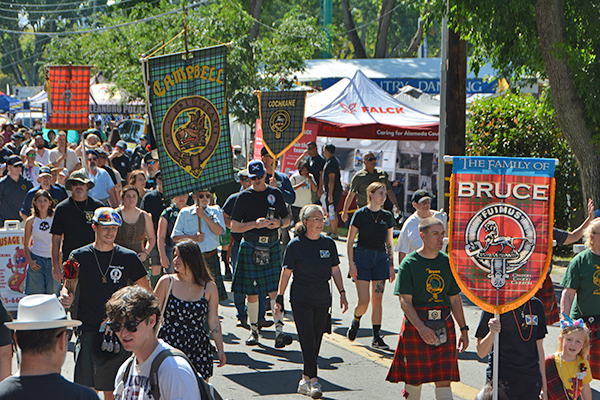
Every Labor Day weekend, the rolling hills of the Tri-Valley give way to the sound of bagpipes, the thud of caber tosses, and the swirl of tartan kilts. The Scottish Highland Gathering & Games in Pleasanton, California is one of the most beloved annual traditions in the Bay Area, drawing tens of thousands of visitors to the Alameda County Fairgrounds for two full days of Scottish culture, athletic competition, music, dance, and family fun. If you have ever typed "Scottish Games Pleasanton" into a search bar, you have probably found a flood of scattered information across ticketing sites, event calendars, and social media pages. This guide brings it all together in one place.
Whether you are a lifelong Highland Games fan, someone with Scottish heritage looking to reconnect with their roots, or simply a Bay Area local searching for a fun weekend activity, this comprehensive guide covers everything you need to know about the Scottish Games in Pleasanton: history, event details, what to expect, tickets, parking, food, and insider tips for making the most of your visit.
What Are the Scottish Games in Pleasanton?
The Scottish Highland Gathering & Games, often simply called "the Scottish Games" or "the Pleasanton Highland Games," is an annual festival hosted by the Caledonian Club of San Francisco. It takes place at the Alameda County Fairgrounds in Pleasanton, California, typically over Labor Day weekend in early September. The event is widely regarded as California's largest and longest-running Scottish festival, and it has become a marquee event on the Tri-Valley community calendar.
The 2026 edition marks the 160th anniversary of the Games, a remarkable milestone for an event with roots stretching back to 1866. This year's gathering is especially significant because it hosts the Men's Scottish Heavy Athletics World Championships alongside the 50th annual U.S. Invitational Heavy Athletics Championships, bringing elite international competitors to Pleasanton to compete for world titles in front of a hometown Bay Area crowd.
At its core, the event blends athletic competition with cultural celebration. You will find world-class heavy athletics, Highland dancing, competitive bagpiping and drumming, Scottish country dancing, sheepdog trials, live music, whisky tastings, historical reenactments, and a marketplace of Scottish food and goods. It is part sporting event, part Highland cultural festival, and part community gathering, all rolled into one unforgettable weekend.
A Brief History of the Pleasanton Scottish Games
The Caledonian Club of San Francisco was founded in the 19th century by Scottish immigrants who wanted to preserve their homeland's traditions while building new lives in California. The Highland Gathering & Games grew out of that desire, evolving over more than a century and a half into the massive festival it is today.
What began as a modest gathering of Scottish clans and immigrant families has grown into an event that attracts competitors from around the world. According to event organizers, the 2026 Games will welcome athletes from seven countries and nineteen states, a testament to how far the tradition has traveled from its roots in 19th-century San Francisco.
The Games have called several Bay Area locations home over the decades, but the Alameda County Fairgrounds in Pleasanton has become its long-term venue, offering the open grass fields, grandstand seating, and infrastructure needed to host heavy athletics, dance competitions, pipe bands, and tens of thousands of spectators simultaneously.
Understanding this history adds depth to the experience. When you watch a piper compete on the fairgrounds or see a group of Highland dancers perform, you are witnessing the continuation of a Scottish-American tradition that has been passed down for generations, largely thanks to organizations like the Caledonian Club that have kept the culture alive on the West Coast.
When Are the 2026 Scottish Games in Pleasanton?
The 160th Annual Scottish Highland Gathering & Games take place on Saturday and Sunday, September 5 and 6, 2026, coinciding with Labor Day weekend. Gates typically open at 8 a.m. each day, with events and entertainment running until roughly 6 p.m. This two-day format gives visitors the flexibility to attend a single day or make a full weekend of it, and many out-of-town visitors choose to stay in the area for both days given how much there is to see.
Because the event falls on a major holiday weekend, it is worth planning ahead. Hotels in Pleasanton, Dublin, and Livermore fill up quickly, and traffic around the fairgrounds can be heavier than usual on both Saturday and Sunday mornings as attendees arrive for opening ceremonies.
Where Are the Games Held?
The Scottish Games take place at the Alameda County Fairgrounds, located at 4501 Pleasanton Avenue in Pleasanton, California, 94566. The fairgrounds sit conveniently near the junction of Interstate 580 and Interstate 680, making them accessible from San Francisco, the East Bay, the South Bay, and the Central Valley alike. This central location is one of the reasons the event draws such a large and geographically diverse crowd every year.
The fairgrounds themselves provide the kind of expansive, multi-field layout that a festival of this scale requires. Between the grandstand, the athletic fields, the dance stages, the piping and drumming areas, and the vendor rows, visitors can expect a significant amount of walking, so comfortable shoes are a must.
Heavy Athletics: The Heart of the Highland Games
If there is one thing most people picture when they think of a Highland Games, it is heavy athletics, and the Pleasanton event delivers this in spades. Heavy athletics competitions showcase feats of raw strength using traditional Scottish implements, and the 2026 Games are especially notable for hosting the Men's Scottish Heavy Athletics World Championships along with the 50th annual U.S. Invitational Heavy Athletics Championships.
Some of the classic events you can expect to see include the following.
The Caber Toss
Perhaps the single most iconic image associated with any Highland Games, the caber toss involves athletes lifting a long, tapered wooden pole, sometimes close to twenty feet in length, and flipping it end over end so that it lands as close to a twelve o'clock position as possible relative to the thrower. It requires an unusual combination of raw power, balance, and technique, and it never fails to draw a crowd.
The Hammer Throw
In this event, athletes swing a metal ball attached to a long shaft, building rotational momentum before releasing it for distance. The Scottish hammer throw differs from the Olympic version in technique and equipment, and watching an elite athlete generate that much torque from a stationary position is genuinely awe-inspiring.
The Stone Put
Similar in concept to the shot put, the stone put has athletes hurling a large stone for distance using specific traditional techniques. It is one of the oldest recorded events in Highland Games history and demonstrates pure explosive strength.
The Weight Throw and Weight Over the Bar
These events involve throwing a weighted object, sometimes for distance and sometimes for height over a raised bar. Weight over the bar in particular produces some of the most dramatic moments of the competition, as athletes attempt to clear increasingly higher bars using a one-handed underhand throwing technique.
The Sheaf Toss
In the sheaf toss, competitors use a pitchfork to hurl a burlap sack stuffed with straw over a raised bar, aiming for height rather than distance. It is one of the more visually entertaining events for spectators, especially as the bar climbs and only the strongest competitors remain in contention.
Because 2026 hosts a World Championship alongside the U.S. Invitational, expect an unusually high caliber of competition, with athletes who have trained specifically to peak for this event. This is a rare opportunity for Bay Area spectators to see truly elite Highland athletes compete on home soil rather than having to travel to Scotland or elsewhere to witness championship-level heavy athletics.
Highland Dancing and Scottish Country Dancing
Alongside the heavy athletics, competitive Highland dancing is a cornerstone of the Games. Dancers, many of whom begin training as young children, compete in traditional dances such as the Highland Fling, the Sword Dance, and the Sean Truibhas, judged on precision, timing, and technique. The costumes alone are worth the visit, with dancers wearing traditional kilts, tartan sashes, and specially designed dance shoes called ghillies.
In addition to Highland dancing, the event features Scottish Country Dancing, a more social, group-based style of dance performed in formation, often accompanied by live fiddle or accordion music. Irish dancing is also part of the entertainment lineup, reflecting the broader Celtic cultural connections celebrated at the Games.
For visitors unfamiliar with competitive dance, watching a full day of Highland dancing offers a fascinating window into a discipline that blends athleticism, artistry, and cultural tradition in a way that is rarely seen outside of dedicated Scottish festivals.
Piping and Drumming Competitions
No Scottish Games would be complete without bagpipes, and Pleasanton's event features extensive piping and drumming competitions throughout the weekend. Soloists and pipe bands from across the country and beyond compete in various classes, showcasing intricate musical arrangements that have been refined over centuries of tradition.
The undisputed highlight for most attendees is the Massed Bands performance, which typically closes out the daily Grandstand Show. During this segment, hundreds of pipers and drummers from multiple competing bands unite to perform together in a single overwhelming wall of sound. It is a spine-tingling moment that regularly leaves first-time attendees in awe, and it is often cited as one of the must-see moments of the entire weekend.
The 2026 Grandstand Show is expected to include special guest performances, with past and confirmed lineups featuring military bands such as the 3rd Marine Aircraft Wing Band and renowned civilian pipe bands like the LA Scots Pipe Band, adding an extra layer of ceremony and spectacle to the opening and closing events each day.
The Kilted Mile and Other Fun Runs
For visitors who want to do more than watch, the Kilted Mile is a lighthearted running event where participants don kilts and dash around a course at the fairgrounds. It is open to a wide range of skill levels and ages, and it has become a popular tradition in its own right, blending athletic participation with the event's overall spirit of good-natured fun. It is a great way for families and casual runners to feel like part of the competition rather than just spectators.
Sheepdog Trials
Among the more unexpectedly captivating attractions at the Scottish Games are the sheepdog trials, which showcase highly trained herding dogs, typically Border Collies, guiding sheep through a series of obstacles and pens under the direction of their handlers. These demonstrations highlight a working tradition central to rural Scottish life for centuries, and they are a perennial favorite among families and animal lovers attending the event.
Five-a-Side Soccer
Reflecting the deep connection between Scotland and the sport of football, the Games also include a five-a-side soccer competition. This smaller-format version of soccer moves quickly and offers an energetic, easy-to-follow spectacle for fans looking for a break from the heavy athletics fields.
Clan Village and Glen of the Clans
One of the most meaningful sections of the fairgrounds for many attendees is the area often referred to as the Glen of the Clans, where dozens of Scottish clan societies set up informational booths and displays. If you have Scottish ancestry, this is your chance to learn about your family's clan history, tartan patterns, and heraldry directly from dedicated clan representatives and genealogy enthusiasts.
Many visitors attend the Scottish Games specifically to research their family history, and the clan area provides an accessible, hands-on way to do exactly that. Volunteers are typically eager to share information, point you toward the correct clan affiliation based on your surname, and even help you locate tartan merchandise that matches your family's heritage.
Living History and Special Guest Appearances
The living history component of the Games features reenactors demonstrating historical Scottish military life, traditional crafts, and period clothing, offering an immersive educational experience for visitors of all ages. For the milestone 2026 event, organizers have announced that actor Adrian Paul, widely known for his role as Duncan MacLeod in the television series Highlander, will join the living history exhibits and host Sword Experience Classes for attendees. This kind of special programming adds a unique draw for pop culture fans alongside the traditional historical demonstrations.
Birds of Prey and Celtic Animal Exhibitions
Nature and history intersect at the birds of prey exhibitions, where trained falconers showcase hawks, falcons, and owls in flight demonstrations that highlight the ancient practice of falconry, a pursuit with deep roots in Scottish and broader European aristocratic tradition. Celtic animal exhibitions round out the family-friendly programming, giving younger visitors an up-close look at breeds historically associated with Scotland and the wider Celtic world.
Food, Drink, and Whisky Tastings
A day at the Scottish Games is not complete without sampling the food. Vendors throughout the fairgrounds serve traditional Scottish fare alongside general festival favorites, so attendees can expect everything from meat pies and shortbread to more familiar festival food staples. For adult attendees, whisky tasting is a major draw, with dedicated tasting areas offering the chance to sample single malts and blended Scotch whiskies, often paired with informative sessions led by whisky experts who can walk you through the nuances of Scotland's most famous export.
Craft beer and other beverages are typically available as well, making the food and drink offerings broad enough to satisfy nearly any palate while still keeping a distinctly Scottish flavor at the center of the experience.
Shopping for Scottish Goods
Beyond food, the Games host an extensive marketplace of vendors selling Scottish and Celtic goods. This typically includes tartan clothing and accessories, handmade jewelry, imported Scottish foods, books on Scottish history and genealogy, bagpipe equipment, and clan-specific merchandise. If you are looking to bring home a tangible piece of the experience, whether that is a family tartan scarf or a set of bagpipe reeds, the vendor rows are the place to browse.
Tickets and Admission Information
Admission to the Scottish Games is paid, with pricing structured around single-day and full-weekend options. Early-bird discounted tickets are typically made available in the months leading up to the event, so purchasing in advance is generally the most cost-effective approach. Children five and under, along with active military members with valid identification, are typically admitted free of charge, making this an accessible event for military families in particular.
Because pricing and ticket tiers can change from year to year, it is best to check the official event website for the most current admission rates and any available discount codes before your visit. Buying tickets online ahead of time also helps you avoid long entry lines on the day of the event, which can be significant given the crowd sizes drawn by a milestone anniversary year.
Parking and Getting There
The Alameda County Fairgrounds offer on-site parking, and additional parking options are typically available in the surrounding area for larger events like the Scottish Games. Given the scale of the 160th anniversary celebration, arriving early is strongly recommended, particularly if you want convenient parking and a good vantage point for the opening ceremonies.
The fairgrounds' location near Interstates 580 and 680 makes the venue reachable from across the greater Bay Area, but Labor Day weekend traffic in the Tri-Valley can still be substantial. Carpooling, arriving well before gates open, and having a backup parking plan are all smart strategies for a smooth arrival.
Where to Stay Near the Pleasanton Scottish Games
For visitors traveling from outside the immediate area, the Tri-Valley region offers a wide range of accommodations. Pleasanton itself has several hotel options within a short drive of the fairgrounds, and the neighboring cities of Dublin and Livermore, both located along the I-580 and I-680 corridor, provide additional choices ranging from budget-friendly chains to more upscale properties. Because the Games fall on a holiday weekend, booking accommodations well in advance is strongly advised, as rooms in the immediate vicinity can sell out weeks ahead of the event.
Tips for First-Time Visitors
If this is your first time attending the Scottish Games in Pleasanton, a little preparation goes a long way toward making the day enjoyable. Consider the following practical tips.
Dress for outdoor conditions and California's early September weather, which can bring warm, sunny days at the fairgrounds. Sunscreen, a hat, and a refillable water bottle are worth packing.
Wear comfortable footwear. The fairgrounds cover significant ground, and moving between the heavy athletics fields, dance stages, piping competitions, and vendor areas involves a fair amount of walking throughout the day.
Arrive early if you want good seating for the Grandstand Show, particularly the Massed Bands finale, which tends to draw the largest crowds of the day.
Bring cash and cards, since some smaller vendors may have preferences or limitations on payment methods, though most larger vendors accept card payments.
Check the daily schedule once you arrive, since heavy athletics, dance, and piping events often run concurrently across different areas of the fairgrounds. Having a rough plan for which events matter most to you will help you avoid missing a favorite competition.
If you have Scottish ancestry, visit the clan area early in the day when volunteers tend to be less busy and more able to spend time discussing family history and tartan details with you.
Why the Pleasanton Scottish Games Matter
Beyond the entertainment value, the Scottish Highland Gathering & Games in Pleasanton serves an important cultural function. It keeps centuries-old traditions alive for new generations, connects Scottish-American families to their heritage, and introduces countless visitors with no Scottish ancestry at all to a rich cultural tradition they might never otherwise encounter. The event also supports charitable causes, including the American Friends of Erskine, the Caledonian Club's nominated charity, which raises funds to support Scotland's Erskine Hospital for Scottish veterans.
For the Tri-Valley community specifically, the Games have become an anchor event on the local calendar, drawing visitors and their spending power into Pleasanton's hotels, restaurants, and shops during a holiday weekend that might otherwise see less regional tourism.
Frequently Asked Questions About the Pleasanton Scottish Games
Is the event family-friendly? Yes. The Scottish Games are designed with families in mind, offering everything from birds of prey demonstrations to sheepdog trials, living history exhibits, and youth-friendly activities alongside the competitive athletics and dancing.
Do I need to buy tickets in advance? While tickets are often available at the gate, purchasing in advance, particularly during early-bird pricing windows, is generally cheaper and helps you skip longer entry lines.
How long should I plan to stay? Many visitors spend a full day at the fairgrounds given the breadth of activities, though it is entirely possible to enjoy a shorter visit focused on specific events like the Grandstand Show or heavy athletics finals.
Is the event accessible for visitors with mobility needs? The Alameda County Fairgrounds generally accommodate accessibility needs, though visitors with specific concerns should check with event organizers ahead of time for the most current accessibility information.
What should I wear? Comfortable, weather-appropriate clothing and sturdy walking shoes are recommended. Many attendees also choose to wear their own clan tartans or general Scottish-themed attire as part of the fun, though it is entirely optional.
Planning Your Visit to the 160th Scottish Highland Gathering & Games
With its milestone 160th anniversary, a World Championship in heavy athletics, and the full spectrum of Highland Games tradition on display, the 2026 Scottish Games in Pleasanton represents one of the most significant editions of the event in recent memory. Whether you come for the caber toss, the Massed Bands finale, the whisky tasting, or the chance to trace your family's clan history, the Alameda County Fairgrounds will once again transform into a vibrant slice of the Scottish Highlands for one unforgettable September weekend.
For the most current information on tickets, schedules, and any updates to the 2026 lineup, visit the official Caledonian Club of San Francisco website and plan your trip to what has rightfully earned its reputation as California's largest and longest-running Scottish festival.