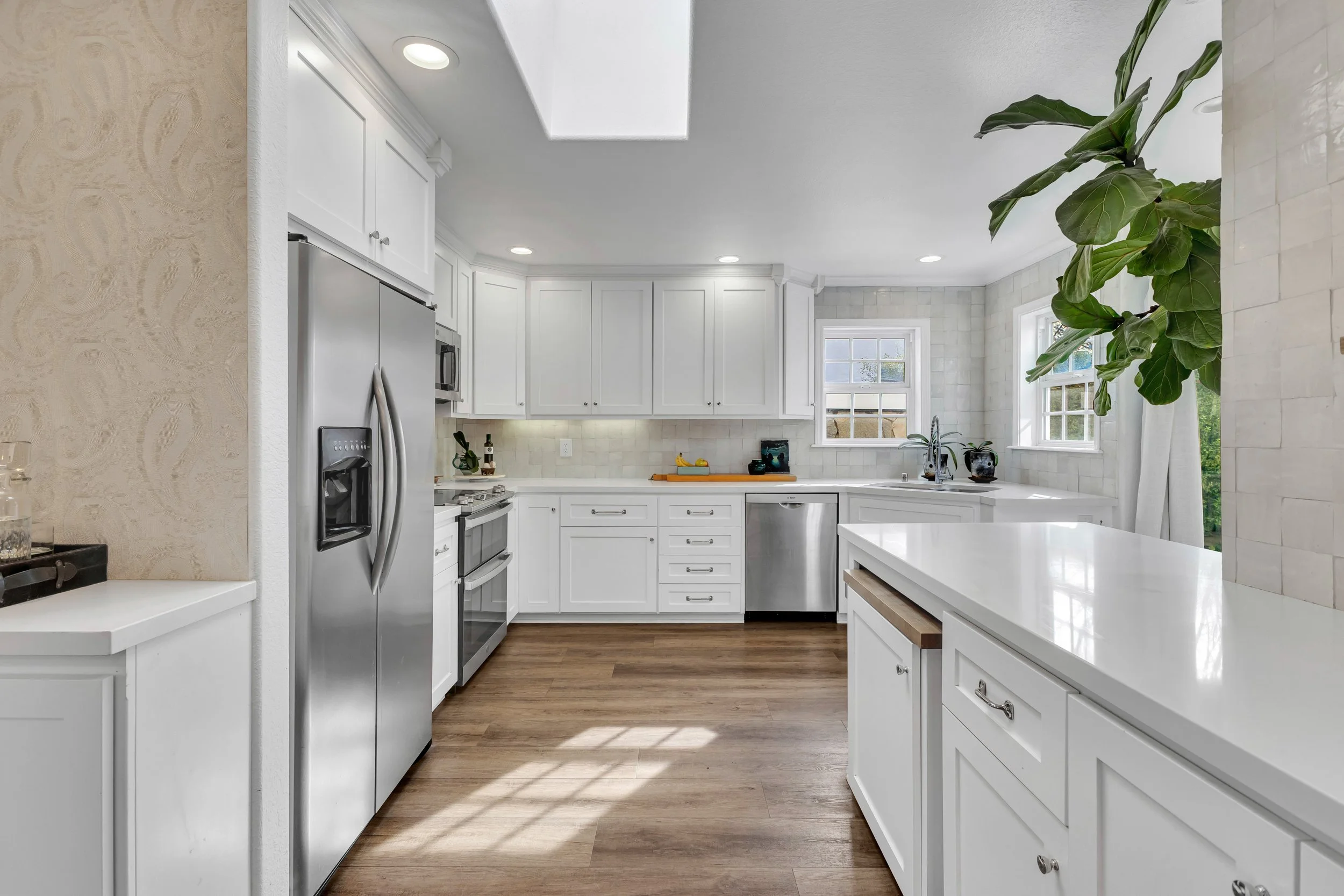
The kitchen has long held the title of the most important room in the house, not just for cooking, but for selling. Real estate agents, appraisers, and seasoned home buyers all agree: the kitchen can make or break a deal. When a kitchen is dated, cramped, or poorly equipped, buyers mentally subtract tens of thousands of dollars from their offer before they've even seen the backyard. When a kitchen is updated, thoughtful, and functional, it becomes the emotional anchor of the entire showing, the room where buyers picture their lives.
If you're preparing to sell your home, building equity, or simply making smart investments in the place where you spend the most time, understanding which kitchen updates actually move the needle on home value is essential. Not every upgrade is created equal. Some renovations deliver dramatic returns; others look great on Instagram but do little for your resale price. This guide breaks down the kitchen updates that genuinely increase home value, why they work, and how to approach each one strategically.
Why the Kitchen Matters More Than Any Other Room
Before diving into specific updates, it's worth understanding why the kitchen occupies such an outsized role in home valuation. According to real estate industry data, kitchen remodels consistently rank among the top home improvement projects for return on investment. A minor kitchen remodel, defined as updating surfaces, appliances, and fixtures without changing the layout, can recoup anywhere from 70 to 85 percent of its cost in added home value, according to Remodeling Magazine's annual Cost vs. Value report.
The kitchen is the functional heart of a home. It's where families gather in the morning, where dinner parties begin, and where guests instinctively migrate. Unlike a bedroom or a bathroom, which buyers evaluate primarily on practicality, the kitchen is evaluated on feeling. Does it feel spacious? Does it feel modern? Does it feel like a place where someone would love to cook and entertain? Those emotional responses translate directly into dollar amounts.
For sellers, a kitchen that looks tired can compress your listing price significantly. For buyers who plan to hold a property long-term, strategic kitchen updates can accelerate equity growth faster than almost any other category of home improvement.
Start With the Fundamentals: Layout and Flow
The single most valuable thing a kitchen can have (and the most expensive to change) is a good layout. Buyers with any design awareness immediately notice whether a kitchen flows well. The classic "work triangle" (the relationship between the refrigerator, stove, and sink) determines how functional a kitchen actually is to cook in. If any of these three elements are awkwardly placed, the entire kitchen feels cumbersome no matter how beautiful the countertops are.
If your kitchen layout is genuinely dysfunctional (for example, if the refrigerator is tucked in a corner that makes opening the door difficult) or if the kitchen is entirely closed off from the living areas, addressing the layout before making cosmetic updates can be worth the investment. Opening up a wall to create a semi-open or fully open-concept kitchen has become one of the most universally appealing updates across all market segments. Open-concept kitchens feel larger, allow better light flow, and speak to the modern preference for entertaining while cooking.
That said, structural changes are expensive and require careful planning. If your layout is merely dated rather than broken, the cosmetic and appliance updates below will serve you far better dollar-for-dollar than tearing out walls.
Countertops: The Visual Centerpiece of Every Kitchen
Nothing ages a kitchen faster (or updates it more dramatically) than countertops. They cover a large visual surface area, they're among the first things buyers touch, and they carry powerful associations about quality. Replacing outdated laminate or tile countertops is frequently the single highest-impact cosmetic update available in a kitchen renovation.
Quartz: The High-Value Standard
Quartz has become the dominant premium countertop material for good reason. Engineered from natural quartz stone and resin, it offers the luxurious appearance of stone with superior durability and virtually zero maintenance. It doesn't require sealing, resists staining, and holds up to heavy daily use. For home sellers, quartz signals quality without the fragility anxiety that some buyers associate with natural stone. White and gray quartz countertops — particularly in large-format slabs with minimal veining — are currently among the most universally appealing choices in mid-to-upper-tier markets.
Marble and Quartzite: The Luxury Statement
In higher-end markets, genuine marble and quartzite countertops can push home value even further. The natural variation and elegance of these materials reads as luxury in a way that engineered materials simply can't replicate. The tradeoff is maintenance — marble is porous and can stain or etch with acidic foods — but for a property positioned at the top of its price range, the visual statement can justify the premium.
Granite: Still Solid, But Trending Toward Neutral
Granite was the dominant premium countertop material for decades, and it remains a solid choice — particularly in darker, more dramatic patterns that have returned to favor with the resurgence of moody, jewel-toned kitchen design. However, the beige and brown granites that were ubiquitous in early-2000s kitchens now read as dated. If you have older granite in those colorways and your budget allows, replacement or resurfacing may actually help rather than hinder your value.
Budget-Friendly Alternatives That Still Perform
Not every kitchen renovation has the budget for stone. Butcher block countertops in warm wood tones add character and appeal strongly to buyers who love the warmth of natural materials — and they're significantly less expensive than stone. High-quality laminate has also made a remarkable comeback, with modern options now closely mimicking the look of marble and concrete at a fraction of the cost.
Cabinets: The Framework That Defines Everything
Cabinets occupy more visual real estate in a kitchen than any other element. They set the tone, establish the color story, and signal quality the moment a buyer walks in. Outdated cabinets (especially honey oak from the 1980s and 1990s) are among the most common reasons buyers mentally check out of a kitchen showing.
Full Cabinet Replacement
If your cabinets are structurally compromised, badly warped, or so outdated that no amount of cosmetic treatment will save them, full replacement is the right call. Semi-custom cabinetry in a clean, modern profile (shaker-style remains the most broadly appealing choice across all market segments) with soft-close hinges and drawer slides signals quality and care. White, off-white, and greige (gray-beige) finishes are the most universally safe choices, though deep navy, forest green, and charcoal are increasingly popular in upscale markets and can differentiate your kitchen positively in the right context.
Cabinet Refacing: High Impact, Lower Cost
If the cabinet boxes are structurally sound (which they often are, even in older kitchens) refacing is one of the highest-value-per-dollar updates available. Refacing involves replacing just the cabinet doors and drawer fronts while keeping the existing frames, then applying a matching veneer to the exposed frame surfaces. The result looks nearly identical to new cabinetry at roughly 40 to 60 percent of the full replacement cost. Combined with new hardware, a cabinet reface can transform an entire kitchen's appearance.
Cabinet Painting: The Fastest Transformation
For kitchens where the cabinet profile is already reasonably modern and the boxes are in good condition, professional painting is the most cost-effective transformation available. This is not a DIY project if you want results that hold up under buyer scrutiny, proper preparation, primer, and a sprayed finish are essential. Done correctly, painted cabinets (particularly in white or a sophisticated navy or green) can look nearly indistinguishable from new cabinetry at a fraction of the cost.
Hardware: The Jewelry of the Kitchen
Cabinet hardware is the easiest and least expensive update in the kitchen, and it's remarkable how much difference the right pulls and knobs can make. Brushed nickel has given way to matte black and brushed brass as the dominant hardware finishes in the current design cycle. Long bar pulls on drawers and simple cup pulls on doors give a kitchen an instantly modern, intentional look. Budget $200 to $600 for a complete hardware replacement and consider it money extremely well spent.
Appliances: The Workhorse of Modern Kitchen Value
Updated appliances are among the most straightforward value signals in a kitchen. A buyer doing a walkthrough who opens the refrigerator and sees a clean, modern interior versus a dinged, older unit immediately recalibrates their perception of the entire property.
Stainless Steel: The Enduring Standard
Stainless steel appliances remain the baseline expectation in most markets at mid-tier price points and above. If your appliances are mismatched colors, heavily scratched, or more than 15 years old, replacement with a matched stainless steel suite will almost always recoup a meaningful portion of its cost in buyer perception and appraisal value.
Panel-Ready and Integrated Appliances
In higher-end markets, panel-ready refrigerators and dishwashers — where the appliance face is covered with the same cabinetry material as the surrounding cabinets — have become the gold standard. The seamless, built-in look signals serious renovation investment and commands premium prices in luxury segments.
The Importance of the Range
The range (or range-and-hood combination) is the focal point of the cooking zone and disproportionately influences buyer perception of kitchen quality. A gas range with grates and a proper stainless or custom hood above it reads as a serious, chef-quality kitchen regardless of what surrounds it. If budget forces you to prioritize one appliance upgrade, the range and hood combination will deliver the most visual and perceived-value impact per dollar.
Smart Appliances
Smart appliances — refrigerators with interior cameras and touchscreen interfaces, ranges with remote preheat, dishwashers with app connectivity — are increasingly common in new construction and can differentiate an older home in competitive markets. However, smart appliance premiums are most effective in tech-forward markets and with younger buyer demographics. In more traditional markets, spending the same budget on high-quality conventional appliances will serve you better.
Backsplash: The Detail That Elevates Everything
A well-chosen backsplash is the exclamation point of a kitchen renovation. It adds color, texture, and visual interest in a way that countertops and cabinets alone cannot. It also protects your walls — a functional benefit that buyers appreciate. The good news is that backsplash tile is relatively inexpensive compared to other kitchen updates, yet the transformation it delivers is significant.
Subway tile remains the most universally safe choice — timeless, clean, and compatible with virtually any cabinet color or countertop material. For higher-end kitchens, full-height backsplash that runs all the way to the upper cabinets (or, in kitchens without upper cabinets, to the ceiling) creates a dramatic, custom look. Handmade ceramic tile, zellige (Moroccan-style glazed tile with natural variation), and large-format stone slabs used as backsplash material are all trending in upscale renovations and command premium perceptions.
Avoid overly trendy or intensely personal backsplash choices — an intricate hand-painted tile that you love may not resonate with buyers. Aim for the sweet spot between tasteful and distinctive: interesting enough to be memorable, neutral enough to be broadly appealing.
Lighting: The Most Underestimated Kitchen Update
Lighting is the most underestimated element in kitchen renovation — and one of the most cost-effective to improve. A poorly lit kitchen looks smaller, less clean, and less appealing regardless of how beautiful the rest of the finishes are. Well-executed lighting makes a kitchen feel spacious, welcoming, and professionally finished.
Recessed Lighting
The baseline for any updated kitchen is proper recessed lighting (can lights) distributed evenly across the ceiling. If your kitchen has a single overhead fixture or inadequate coverage, adding recessed lights on a dimmer switch is a relatively accessible electrical project that dramatically transforms how the space feels at any time of day.
Under-Cabinet Lighting
Under-cabinet LED lighting illuminates the counter workspace, eliminates shadows, and adds a layer of ambiance that buyers genuinely respond to. It's also one of the least expensive updates on this entire list — LED strip lights with a clean, warm temperature (2700K–3000K) can be installed for a few hundred dollars and look like a thoughtful, custom finish.
Statement Pendants
Pendant lights over a kitchen island or peninsula are a design statement that buyers notice and remember. The right pendant — a sculptural rattan globe, a sleek matte black cone, a cluster of blown glass orbs — elevates the entire kitchen's design narrative and signals that the space was renovated with intention. Budget $300 to $1,500 for a quality pair of pendants and consider them among the best-value visual upgrades available.
Sinks and Faucets: Small Details, Strong Signals
The kitchen sink and faucet are touched hundreds of times a week. Buyers notice them, and an updated sink-and-faucet combination — even in an otherwise dated kitchen — communicates care and modernity.
Farmhouse (apron-front) sinks have maintained their popularity and read as a premium upgrade in most markets. They're practical, visually impactful, and signal a kitchen that was thoughtfully designed rather than simply functional. Deep single-basin stainless sinks remain a solid, universally appealing option. Composite granite sinks in black or gray are increasingly popular for their durability and modern aesthetic.
Faucets deserve equal attention. A pull-down or pull-out faucet with a matte black or brushed gold finish communicates modern design sensibility. Touchless faucets, once found only in commercial kitchens, have become more mainstream and can differentiate a home in competitive markets. Expect to spend $150 to $600 on a quality faucet — a significant value relative to the impression it creates.
Flooring: The Foundation That Ties It All Together
Kitchen flooring takes enormous daily abuse — foot traffic, spills, dropped pots — and it shows its age accordingly. Cracked tiles, scratched vinyl, or warped laminate are immediate red flags for buyers. Updated flooring, by contrast, makes an entire kitchen feel cleaner, larger, and more current.
Large-Format Tile
Large-format porcelain tile (24"x24" and larger) has become the premium standard in kitchen flooring. Fewer grout lines mean a cleaner, more expansive look. Tile in neutral stone-look finishes — light gray, warm beige, soft white — works beautifully with virtually any cabinet color and reads as a significant investment to buyers.
Hardwood and Engineered Hardwood
Wide-plank hardwood or engineered hardwood in a kitchen that flows into an adjacent living or dining area creates a sense of seamless, expansive space. Buyers who walk from a living room with hardwood floors into a kitchen with the same or complementary flooring immediately perceive the home as more unified and luxurious. Light to medium oak tones are currently the most broadly appealing wood choice.
Luxury Vinyl Plank (LVP)
LVP has earned its prominent position in renovation discussions — modern LVP is genuinely durable, 100% waterproof, comfortable underfoot, and visually convincing in quality plank formats. For kitchens on a moderate renovation budget, LVP in a quality hardwood-look finish is a smart, value-forward choice that buyers in mid-tier markets respond to positively.
The Open Shelf Question
Open shelving in kitchens has had an extended moment in the design spotlight, and it remains a divisive but potentially valuable update. Removing upper cabinets and replacing them with floating wood or metal shelves creates an airy, bright feel that photographs beautifully and appeals strongly to design-aware buyers. The downside is storage reduction and the requirement to keep shelves perfectly staged — perpetually.
If your kitchen has an awkward upper cabinet configuration that makes the space feel dark or cramped, selectively replacing some upper cabinets with open shelving can be a meaningful upgrade. Replacing all upper storage with open shelving is a bolder move best suited to kitchens with ample alternative storage or to markets where design-forward buyers are the primary demographic.
Kitchen Islands: Adding Workspace and Perceived Value
A kitchen island — whether built-in or moveable — is one of the most universally desired kitchen features among modern buyers. Islands provide additional counter workspace, storage, seating, and a natural gathering place. In an open-concept kitchen, an island also defines the kitchen zone within the larger living space.
If your kitchen layout can accommodate a permanent island without cramping circulation (the general rule is a minimum of 42 inches of clearance on all sides), adding one is a high-value upgrade. A waterfall countertop edge on an island — where the countertop material wraps vertically down to the floor on one or both ends — has become a signature luxury statement that photographs dramatically and commands buyer attention.
For kitchens where a permanent island isn't feasible, a well-chosen mobile island can add function and be staged effectively for showings.
Minor Updates With Major Impact: The Power of Cohesion
Not every kitchen improvement needs to be expensive to be effective. Sometimes the most powerful thing you can do is bring cohesion to a kitchen that feels disjointed. Repainting walls in a clean, warm white or soft gray. Replacing dated light switch plates and outlet covers with modern ones. Adding crown molding to the top of cabinets. Installing a new cabinet above the refrigerator where there isn't one. These small gestures of care and intention signal to buyers that the home has been maintained and thoughtfully tended — which is worth more than any individual upgrade.
How to Prioritize: Matching Updates to Your Market
The single most important principle in kitchen renovation for resale is matching your investment to your market. Over-improving a kitchen in a neighborhood where comparable homes have basic kitchens will not return your investment — buyers won't pay above neighborhood ceiling prices regardless of how beautiful your renovation is. Under-improving a kitchen in a premium market leaves money on the table.
Work with a local real estate agent who understands your specific neighborhood and price tier before committing to a renovation budget. Understand what comparable homes have done — are they featuring quartz countertops and custom cabinets, or laminate and stock cabinets? Your kitchen should be competitive with the top end of your comp set, not exceed it so dramatically that you're out of step with the market.
As a general framework:
For homes in the entry-level to mid-tier price range, focus on: professional cabinet painting, new hardware, updated lighting, new countertops in a mid-range material, and appliance upgrades if they're badly dated.
For homes in the mid-tier to upper-mid range, consider: cabinet refacing or replacement, quartz countertops, new backsplash, updated plumbing fixtures, and a full appliance suite.
For luxury market homes, full kitchen renovations with custom cabinetry, premium stone countertops, professional-grade appliances, statement lighting, and designer tile are expected — and failing to meet that expectation will cost you at sale.
The Bottom Line: Kitchen Investment Is Home Value Investment
The kitchen is the room where home value is won or lost. A strategic, well-executed kitchen update — even a modest one — can mean the difference between a home that sits on the market and one that generates multiple offers. It's the room that photographs best, tours best, and sticks in buyers' memories longest after the showing.
You don't need to spend a fortune to move the needle. A cohesive set of focused improvements — new countertops, painted cabinets, updated hardware, better lighting, and a fresh backsplash — can transform a kitchen that feels tired into one that feels current and inviting, often for $15,000 to $30,000 in mid-tier markets. And in the right market, that investment can return $30,000 to $60,000 or more in added home value.
The most important thing is to think strategically, buy for your buyer rather than for your own taste, and remember that in real estate, the kitchen isn't just a room — it's an argument for the price you deserve.
Planning a kitchen renovation? Working with a licensed contractor and a knowledgeable local real estate agent before you begin will help ensure your investment is targeted, market-appropriate, and positioned for maximum return. We have great local vendor connections in the Tri-Valley, reach out!
More Blogs You Might Find Interesting
Hidden Maintenance Issues That Affect Home Value in the Tri-Valley | Link
2026 Interior Design Trends for the Tri-Valley | Link
Simple Ways to Make Your Home Feel Calm, Organized & Well-Maintained | Link
What Experts Project for Home Prices Over the Next 5 Years | Link
The Most Common Questions About Selling Your Home in the East Bay Area | Link